Surface Repair Before Recoating: Why Proper Preparation Matters
Surface Repair Before Recoating: Why Proper Preparation Matters
In industrial restoration and refurbishment, coating is not the first step.
A successful coating process always begins with proper surface preparation and repair.
Damaged metal surfaces, cracks, corrosion, and uneven areas can affect coating adhesion and reduce the service life of the final finish.
That is why professional surface repair plays an important role before painting, powder coating, or protective coating applications.
1. Why Surface Repair Is Important
Before applying any new coating, the original surface condition must be evaluated.
Common problems include:
Corrosion damage
Cracks or small defects
Surface wear
Previous coating failures
Uneven metal surfaces
If these problems are not repaired, the new coating may:
Peel off easily
Develop cracks
Lose protection performance
Require earlier maintenance
A strong surface foundation creates a stronger final result.
2. Welding Repair for Damaged Metal Surfaces
For metal components with cracks, holes, or structural damage, welding repair is often required before finishing.
Professional welding repair can:
✔ Restore damaged areas
✔ Improve surface strength
✔ Reduce replacement costs
✔ Extend equipment service life
Common applications include:
Automotive components
Alloy wheel repair
Heavy equipment parts
Industrial machinery
Metal fabrication
3. Surface Preparation After Repair
After repair work is completed, the surface usually requires additional treatment before coating.
Common preparation methods include:
Mechanical Surface Treatment
Examples:
Sandblasting
Grinding
Polishing
Benefits:
Removes rust and old coatings
Creates a uniform surface
Improves coating adhesion
Chemical Surface Treatment
Examples:
Paint stripping
Rust removal solutions
Benefits:
Removes difficult coatings
Reduces manual labor
Prepares surfaces for refinishing
4. The Relationship Between Repair and Coating Quality
Many coating failures are not caused by the coating itself.
They are caused by poor preparation.
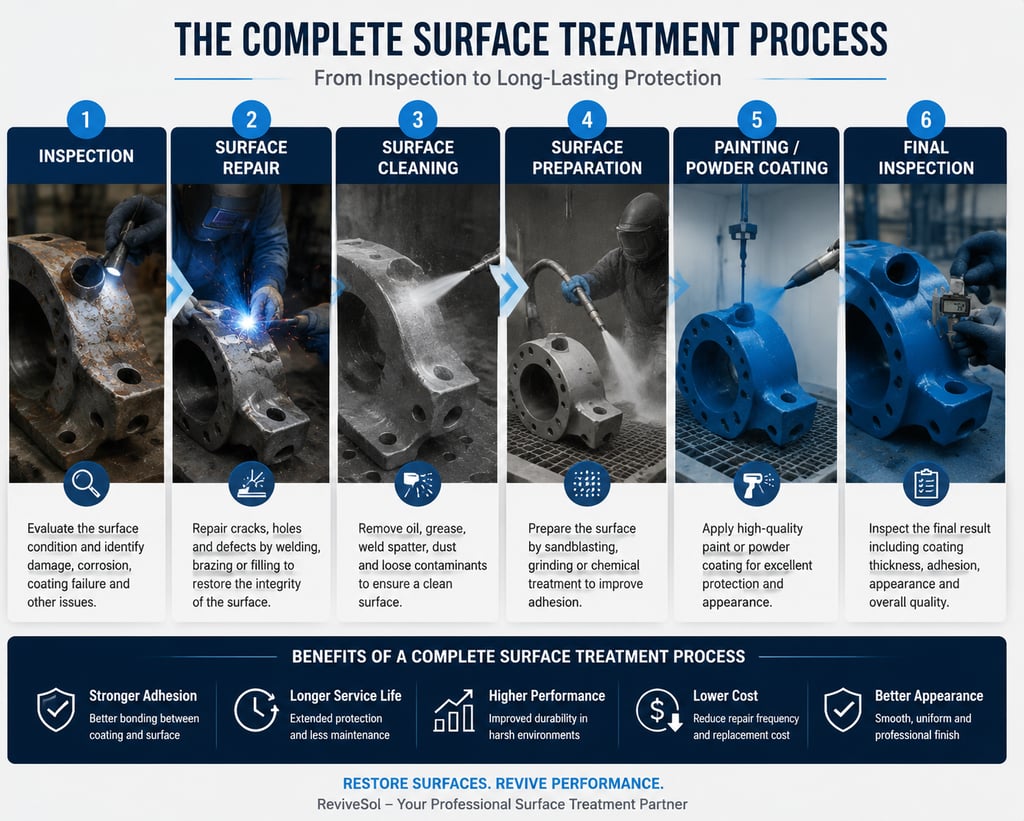
A complete restoration process usually follows:
Inspection
↓
Surface Repair
↓
Surface Cleaning
↓
Surface Preparation
↓
Painting / Powder Coating
↓
Final Inspection
This complete process helps achieve:
Better appearance
Longer coating lifetime
Reduced maintenance costs
Higher restoration quality
5. ReviveSol Surface Treatment Solutions
At ReviveSol, we provide integrated surface treatment solutions including:
Chemical paint stripping
Sandblasting solutions
Surface repair equipment
Workshop planning and engineering support
We help customers restore damaged surfaces, improve production efficiency, and achieve professional finishing results.
Conclusion
Surface repair is a critical step before any coating process.
Whether restoring automotive parts, industrial equipment, or metal structures, proper preparation ensures better performance and longer-lasting results.
Restore Surfaces. Revive Performance.